
Estimated reading time: 10 minutes
This article is for manufacturing leaders looking to modernize fragmented manufacturing operations while securing employee buy-in for digital transformation.
Key Takeaways
- Digital transformation is a continuous process of reinvention, driven by the same mindset that enabled TDK’s evolution from cassette tapes to advanced electronic solutions.
- At TDK we define digital transformation as “value creation through digitalization” and we focus first on aligning and communicating that vision across the organization before selecting technologies.
- 4 core systems (PLM, CRM, MES, and ERP) serve as the foundation of TDK’s operations, with Critical Manufacturing providing the MES platform across 20 factories worldwide.
- A single source of truth replaced fragmented Excel-based tracking, reducing time spent reconciling data and enabling teams to focus on decision-making and execution.
- Critical Manufacturing MES standardized production processes, strengthened traceability, and delivered real-time operational visibility across the organization.
- Improved data quality, automation, and predictive maintenance accelerated decision-making, while reinforcing the importance of keeping people at the center of transformation and change management.
TDK’s Own Survival Story from Cassette Tapes to AI Transformation
What do the iPhone and Netflix have in common? They both knocked down companies that were once considered untouchable: Nokia and Blockbuster. Not because those companies lacked resources or talent but because they failed to anticipate and respond to how their market were changing.
At TDK, we know this lesson firsthand because we have already lived through it. The company survived by relentlessly reinventing itself, from cassette tape to today’s components powering autonomous driving, robotics, renewable energy, and AI.
As Charles Darwin put it, survival doesn’t go to the strongest or most intelligent, but to those most capable of adapting. That principle shapes how TDK approaches digital transformation.
But it’s easier said than done. TDK Electronics digital transformation took a while to become a reality. This is due to several reasons. Depending on the site, some departments were still communicating by fax; Windows NT terminals were operating alongside Windows 7 workstations, production processes ranged from paper-based records to the latest ERP systems, and Excel spreadsheets remained essential for managing increasingly complex manufacturing operations serving a constantly evolving market.
Faced with this complexity, we recognized that the first step was not choosing a new system, but building a shared vision and securing employee support for the change.
Securing Employee Buy-in Before Deployment
Perhaps the most significant decision throughout the programme was the approach to change management.
Rather than starting with technology and expecting employees to adapt, we started by defining digital transformation for itself, in a single vision statement communicated across the entire organization: “digital transformation exists to create value through digitalization”.
That distinction matters. It kept the effort anchored to measurable outcomes instead of technology for its own sake.
But a vision statement alone doesn’t move a 20,000-person organization. Open, ongoing communication with employees had to come first, before any system was selected. The early stages were not without resistance. Employee acceptance took time.
What ultimately changed perceptions were the first tangible results. Once operators could see on their shop-floor terminals that digital tools helped identify deviations more quickly or prevented procedural errors, the concept of MES became something concrete, practical and genuinely valuable.
The Operational Backbone Behind TDK’s Digital Transformation
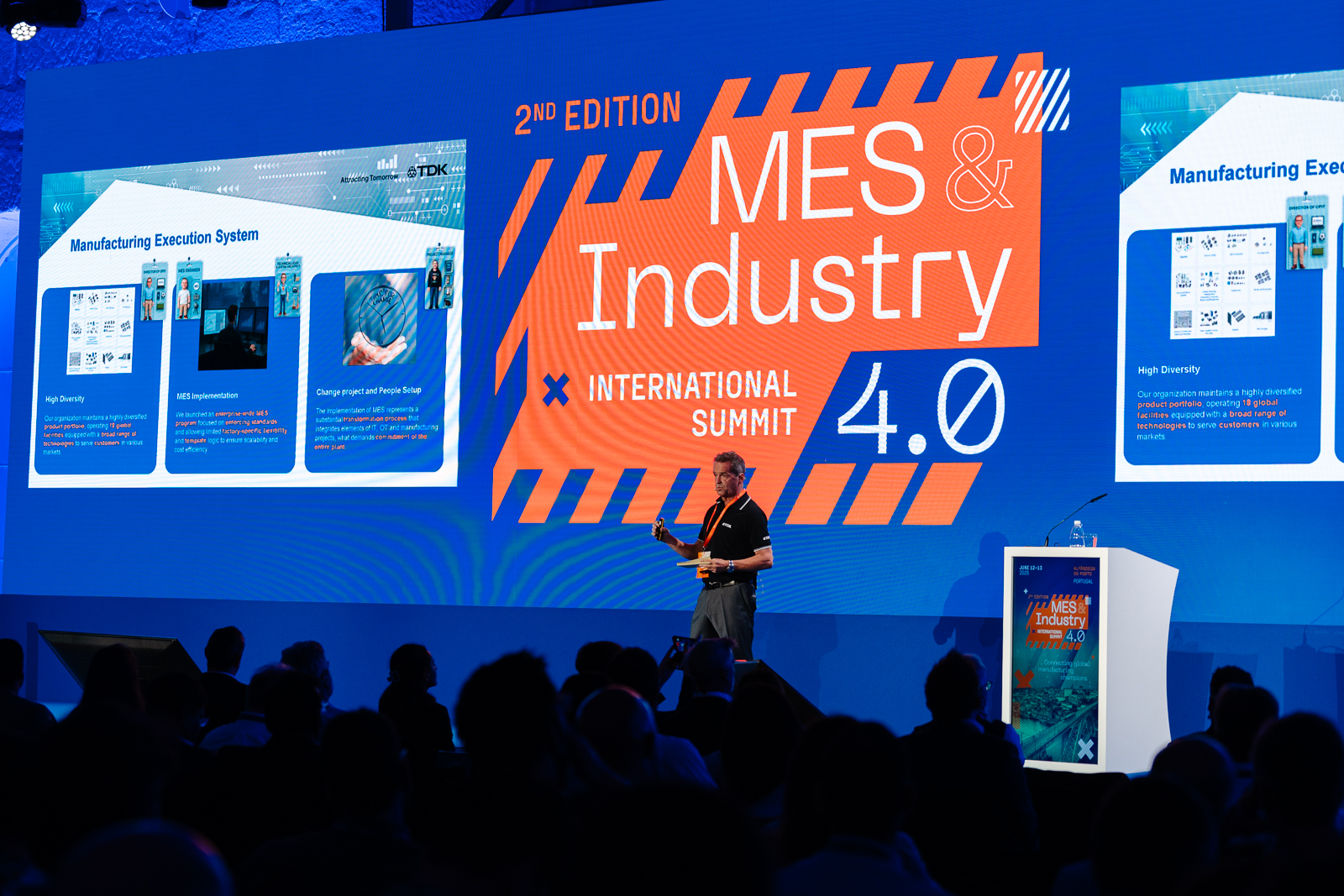
Why Primary Systems Come First
Our approach centers on 4 “robust primary systems”. Those are product lifecycle management, customer relationship management, manufacturing execution, and enterprise resource planning. In a production environment, these 4 are the foundation everything else builds on.
The scale involved is significant. We launched over 2,600 new products last year alone, and manages a portfolio of roughly 80,000 active products across its business. Every new product carries its own part number, its own lifecycle, and its own management overhead.
Getting the primary systems right allowed us to harmonize processes across business units, accelerate innovation, and respond to what customers actually need.
Replacing Excel with a Single Source of Truth
Before standardizing our shop-floor systems, we faced a familiar manufacturing challenge. Teams were pulling inconsistent data from multiple spreadsheets and spent more time debating which figures were correct than acting on the insights.
A standardized dashboard, fed by a single source of truth, changed that. Shop floor teams stopped arguing about the data and started acting on it and therefore reacting faster to defect rates and production abnormalities because everyone was looking at the same numbers.
The rollout spans 20 factories worldwide and is expected to take a full decade from initial supplier selection to the last site going live. This is also a reminder that transformation at this scale is a long journey, and it takes more than a single deployment.
How TDK Electronics Scaled Digital Transformation Across 20 Factories
TDK’s manufacturing footprint is broad and largely Europe-centered, with additional sites in Brazil, China, Indonesia, Malaysia, and India. Standardizing execution across all 20 factories meant we had to select a strategic partner for manufacturing execution.
We chose Critical Manufacturing as its strategic partner to run an enterprise-wide standardization program meant to enforce common processes while still allowing factory-specific flexibility. Functionally, it breaks down as roughly 95% out-of-the-box capability, 3% a shared “TDK core” layer built on the company’s own product framework (enforcing a global standard across every site), and 2% plant-specific customization for local needs.
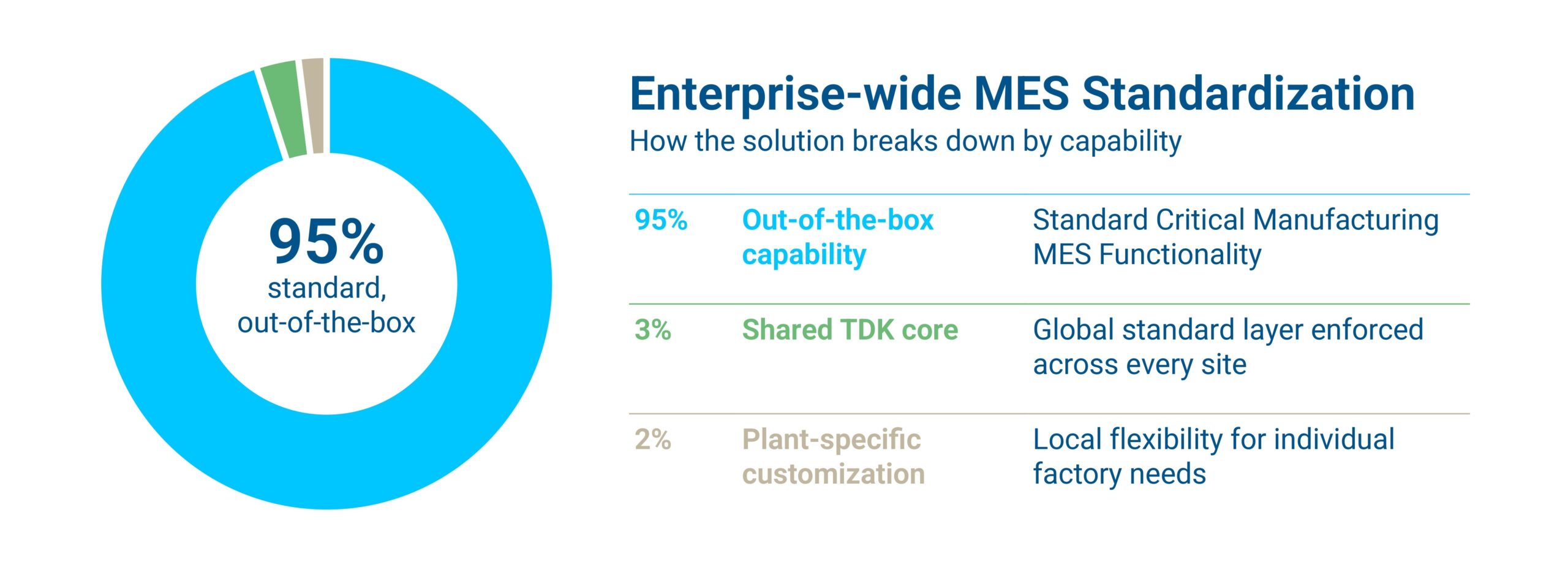
The effort behind that last 5%, though, is disproportionate to its size. Harmonizing a global standard while still allowing individual factories the flexibility they need is the harder half of the work.
In practice, standardization comes down to a real shop floor dashboard tracking active assets, OEE, and defect rates by product line, replacing what used to be scattered Excel trackers pulled from multiple databases.
Different teams no longer arrive at the daily shop floor meeting with different numbers for the same problem. They arrive with one dashboard, fed by one source of truth, and spend the meeting on what to do about it instead of whose data is right.
Where AI Is Already Paying Off
Not every win at TDK comes from a large-scale system rollout. Some of the most useful ones are small, targeted automations.
1. Automated Daily Scheduling
At one China factory, a software bot now matches production orders against bills of materials to plan roughly 1,000 daily warehouse-to-shop-floor transfers across three shifts. Work that used to be a manual is now a spreadsheet-driven process. Although a person still reviews the output before it’s acted on.
2. Predictive Maintenance and Anomaly Detection
AI models flag abnormal process control parameters on the shop floor before they become larger quality issues.
3. Faster early-stage R&D
In ferrite material development, TDK built a chatbot trained on more than 10,000 pages of academic publications and internal results. It gives engineers a research starting point in days instead of the weeks it used to take through trial-based development, the engineering team still owns everything from there.
The common thread is that AI doesn’t replace the decision but rather removes the delay before someone can make one.
The Human Side of Digital Transformation
One of the more striking demonstrations from TDK’s own transformation work is an AI avatar of the CEO, trained on just two minutes of video, capable of presenting in languages that I don’t actually speak. The intended is training and knowledge-sharing at a scale that live presentations across a global, multilingual workforce can’t match.
But the technology isn’t the point. There is no AI without “I”, no artificial intelligence without human intelligence. Employees at every level, from the shop floor to management, are the ones who have to trust the data, adopt the tools, and actually use them to make decisions. Transformation succeeds or fails on that human engagement, not on how advanced the underlying technology is.
Bringing Digital Transformation to the Customer Journey
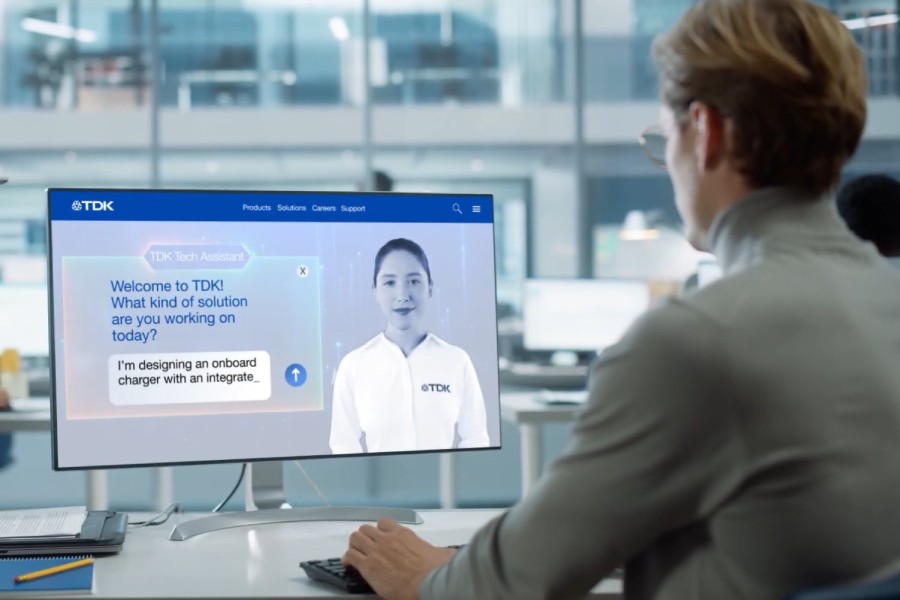
TDK’s DX effort started on the shop floor, but the next frontier is digital marketing. The company’s success depends on understanding customer pain points and guiding buyers through their journey.
At the Summit, I presented TDK’s mock-up of what that experience could look like. A guided, conversational web journey that qualifies a buyer’s technical requirements, routes them to relevant product information, and connects them with the right specialist all without friction.
It isn’t live yet, but it signals where the company is headed. Buyers are getting younger, and they expect the kind of guided digital experience they’re used to elsewhere. Manufacturers that want to stay relevant will need to meet that expectation.
Three Lessons for Any Manufacturer Starting This Journey
1. Pilots are the easy part.
Lighthouse projects prove potential, but real progress depends on strategic scaling and a persistent, multi-year commitment to the rollout.
2. Technology doesn’t drive change, leadership does
DX can transform operations and decision-making, but only when human leadership and engagement carry it forward.
3. Smarter decisions still need human judgment.
AI can point to the right data and surface better options, but people still have to verify it, trust it, and act on it.
The Real Lesson From the Cassette Tape Era
TDK didn’t survive four different technology eras (magnetic tape, hard disk components, passive components, batteries and sensors) by chance. It survived because it treated adaptation as continuous.
That’s the real throughline of TDK’s digital transformation. The instinct for reinvention that’s carried the company through nearly a century, applied now to how the organization itself works.
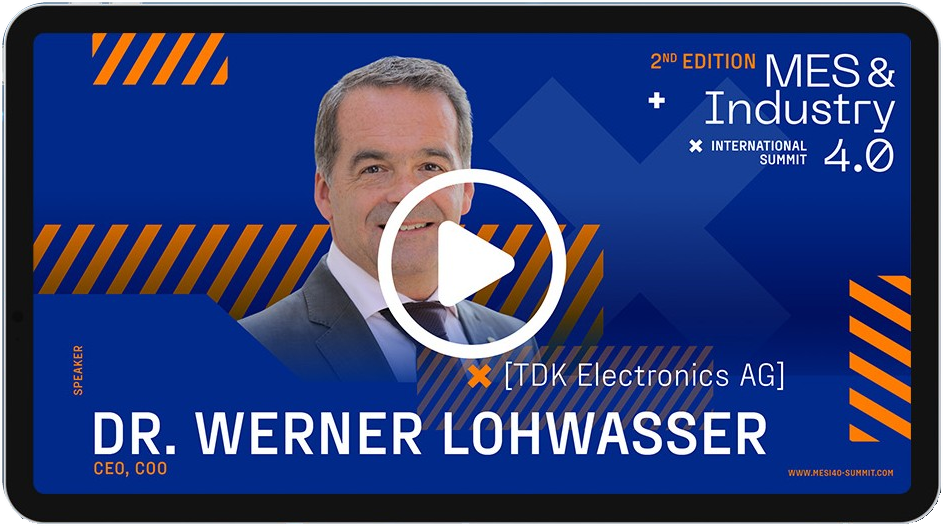
Watch the full session
See the complete session to learn how TDK Electronics standardized its MES across sites.
FAQ
TDK uses AI for anomaly detection and predictive maintenance on the shop floor, automated production scheduling (via a software bot handling roughly 1,000 daily transfer orders at one factory), and an AI-powered knowledge engine that speeds up early-stage material research and development.
TDK’s strategy centers on four “robust primary systems”: product lifecycle management (PLM), customer relationship management (CRM), manufacturing execution (MES), and ERP paired with a company-wide vision statement, sustained employee communication, and low-code and generative AI tools to bridge data and use cases.
At TDK, standardizing manufacturing execution systems across 20 global factories is expected to take roughly a decade from initial supplier selection to the final site going live.
At TDK, AI’s payoff shows up as time saved. A scheduling bot cuts a manual, spreadsheet-driven planning process down to a quick human check for roughly 1,000 daily warehouse transfers, and an AI-powered R&D knowledge engine shortens early-stage material development from several weeks to a few days. Predictive maintenance and anomaly detection add a third layer of value by catching process issues before they cause larger defect or downtime costs.