

SAP has confirmed end-of-life for SAP ME and MII. There is no upgrade path to SAP Digital Manufacturing. Every SAP ME customer must fund a full reimplementation. The decision about which direction has already been forced. The choice of destination is still yours.
Time remaining until all SAP ME and MII support ends

Feature freeze. SAP ME will not improve.

End of mainstream maintenance. No bug fixes or security patches.

Extended maintenance at premium cost. Reduced scope.

All support ends. Completely unsupported.
SAP’s recommended successor — SAP Digital Manufacturing — runs on an entirely different technology platform. There is no migration tool, no data transfer utility, and no way to reuse what has been built in SAP ME over the past decade. Everything starts from scratch, regardless of which direction you choose.
Migration tools
provided by SAP
Upgrade path.
Full reimplementation.
Months for a single
complex site
Of original implementation
effort to rebuild
"This is the moment to build the factory you actually want, or recreate the constraints you had in the past."
The central question every SAP ME customer now faces.Activity Hooks, MII BLS transactions, and custom data fields have accumulated over a decade into a customization footprint that is invisible, undocumented, and distributed across four locations with no dependency map between them. You cannot plan a reimplementation of something you cannot inventory.

Java classes buried in NetWeaver, written by consultants who left. The hook registry tells you they exist — not what they do. Understanding requires reading source code that may no longer exist.
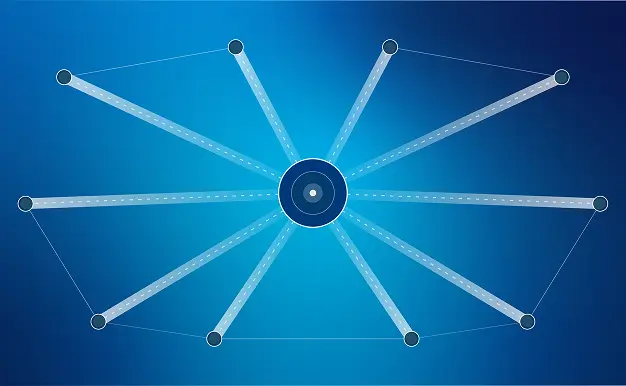
Dozens to hundreds of XML workflow files handling ERP integration, equipment comms, and business logic. Embedded SQL. Hardcoded references. Cannot be imported into SAP DM.
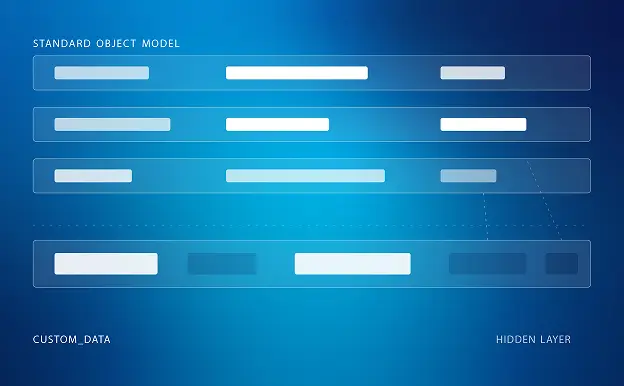
Surrogate workflow engines. A field called HOLD_REASON on an SFC, checked by a hook nobody remembers writing. Invisible dependencies with no impact analysis tool provided by SAP.
"How many Activity hooks do you have in production right now? Can you show the source code for each one?"
The question that starts every honest transition conversation.

Moving from SAP ME to SAP DM it’s a full reimplementation on a different technology stack, with a different data model, different extensibility architecture, and different operational constraints. There is no upgrade.

Every Activity hook must be rewritten. The ME Java SDK does not exist in SAP DM. Code is not portable — concepts transfer, the code does not.

SAPMEINT is gone. All ERP flows must be rebuilt in SAP Integration Suite from scratch. IDoc/BAPI replaced by API-based cloud integration.

Different schema, no migration tool provided by SAP. Historical production data cannot be imported into SAP DM.

Mandatory quarterly SaaS releases. For regulated environments, each release triggers a re-validation cycle — a permanent new operational cost.
The transition touches manufacturing IT, operations leadership, process excellence, quality and compliance. Each has a different stake and a different reason this decision cannot wait.
The custom logic built into your SAP ME system over the years lives in places that are difficult to inventory and impossible to migrate automatically? Before any platform decision, you need a clear picture of what you actually have and what it will take to rebuild it.

The question is not whether to reimplement. SAP has settled that. The question is whether the next platform removes the operational constraints or recreates them at significant cost and effort.

Every process improvement that requires an IT project first is a constraint. The forced reimplementation is a rare opportunity to choose a platform where operational change is driven by configuration instead of code, projects, and waiting.

For validated manufacturing environments, who controls the update schedule is a compliance question. Mandatory quarterly updates that trigger re-validation cycles represent a permanent ongoing cost that some platforms avoid entirely.
A series examining what the SAP ME end-of-life actually means at the architecture level: and what the next decade of manufacturing execution should look like.

As an SAP ME customer can you fully inventory what has been built inside your system? This post explains why it matters before any transition planning begins.

A layer-by-layer technical account from who has been building, extending and mantaining MES systems for 10 years. What the transition actually requires, and why the scope surprises most organizations.

The forced reimplementation is an opportunity. Seven architectural principles for a manufacturing execution platform that serves you for the next decade, not just the next few years.
A technical analysis for operations and IT leaders. SAP ME end-of-life, why DM is not an upgrade, the real transition costs, and how to think about the decision ahead.
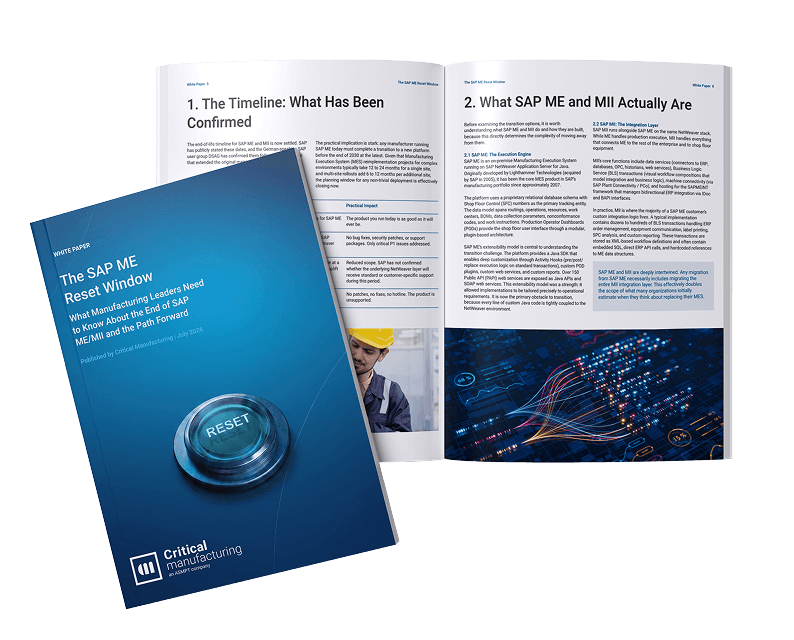
Written for COOs, VP Operations, and Manufacturing IT Directors who need to understand the structural reality before committing to a path.
Written for COOs, VP Operations, and Manufacturing IT Directors who need to understand the structural reality before committing to a path.
This fixed-scope assessment, delivered by HCLTech, an independent implementation partner, maps the full scope of your SAP ME implementation, stress-tests it against both SAP DM and modern MES alternatives, and gives your leadership team the clarity to make an informed decision.

2–3 weeks

One site, one production area

Fixed price

Standalone deliverable — not a sales exercise

Disclaimer: Critical Manufacturing is not a partner of SAP, nor does it have any commercial relationship with SAP SE.

